


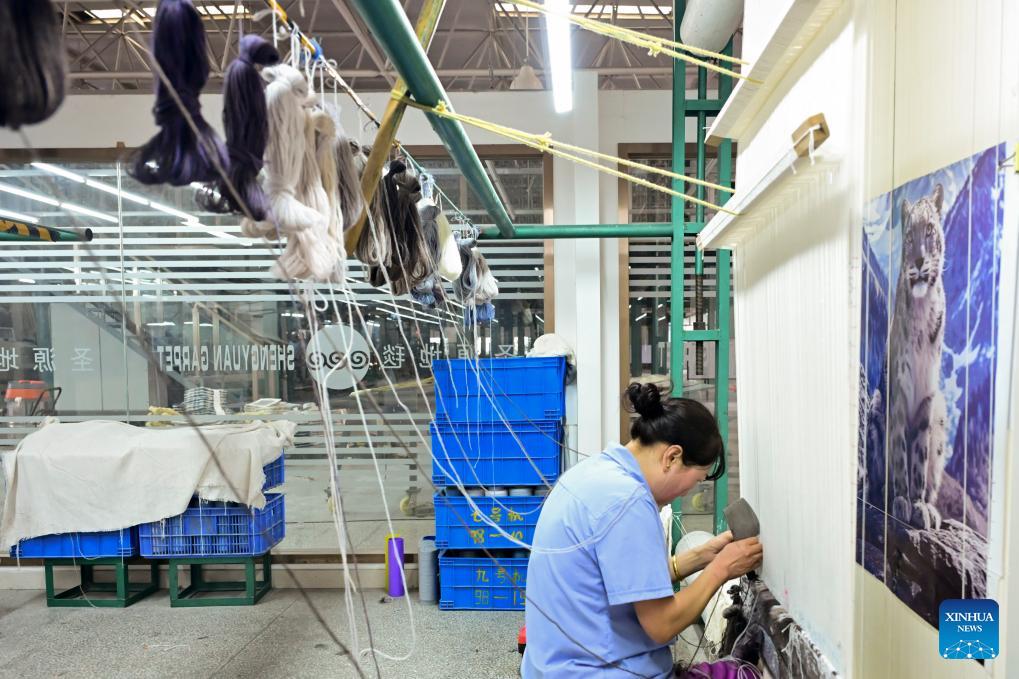
An employee works on a Tibetan carpet at a workshop of Shengyuan carpet group in Xining, northwest China's Qinghai Province, July 21, 2025. Located in Chengzhong District of Xining City, Shengyuan carpet group is an enterprise specializing in the design and production of Tibetan carpets. Since its establishment in 2007, the company has recruited people from surrounding areas, with 90% of its employees coming from nearby villages and including various ethnic minorities such as Tibetan and Tu ethnic groups.
Tibetan carpet is a traditional handicraft on the Qinghai-Tibetan Plateau with a history of more than 2,000 years. The fine yak and sheep wool and the delicate weaving skills and patterns made the handmade products popular among overseas and domestic customers. In 2006, the weaving skills of Tibetan carpets from Jiaya Village, a village of Huangzhong County in northwest China's Qinghai Province, were listed as a national intangible cultural heritage of China.
In recent years, Qinghai has guided Tibetan carpet enterprises to integrate modern technology and traditional handicrafts, which injects new momentum into rural revitalization while preserving traditional skills. (Xinhua/Qi Zhiyue)
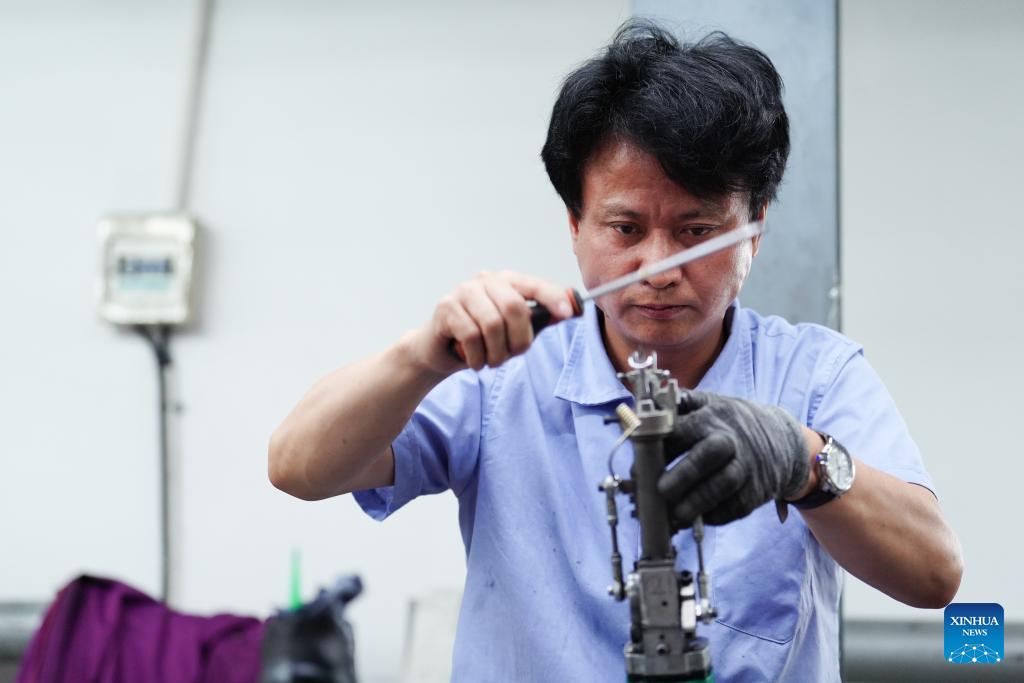
An employee checks a tool for the production of Tibetan carpet at a workshop of Shengyuan carpet group in Xining, northwest China's Qinghai Province, July 21, 2025. Located in Chengzhong District of Xining City, Shengyuan carpet group is an enterprise specializing in the design and production of Tibetan carpets. Since its establishment in 2007, the company has recruited people from surrounding areas, with 90% of its employees coming from nearby villages and including various ethnic minorities such as Tibetan and Tu ethnic groups.
Tibetan carpet is a traditional handicraft on the Qinghai-Tibetan Plateau with a history of more than 2,000 years. The fine yak and sheep wool and the delicate weaving skills and patterns made the handmade products popular among overseas and domestic customers. In 2006, the weaving skills of Tibetan carpets from Jiaya Village, a village of Huangzhong County in northwest China's Qinghai Province, were listed as a national intangible cultural heritage of China.
In recent years, Qinghai has guided Tibetan carpet enterprises to integrate modern technology and traditional handicrafts, which injects new momentum into rural revitalization while preserving traditional skills. (Xinhua/Qi Zhiyue)
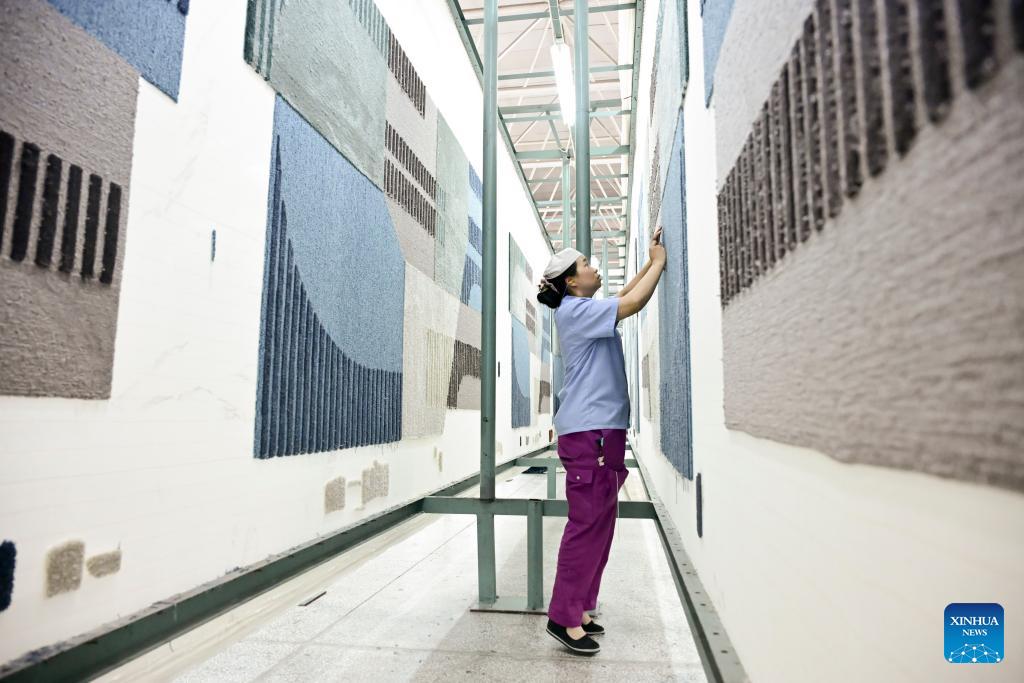
An employee works on a Tibetan carpet at a workshop of Shengyuan carpet group in Xining, northwest China's Qinghai Province, July 21, 2025. Located in Chengzhong District of Xining City, Shengyuan carpet group is an enterprise specializing in the design and production of Tibetan carpets. Since its establishment in 2007, the company has recruited people from surrounding areas, with 90% of its employees coming from nearby villages and including various ethnic minorities such as Tibetan and Tu ethnic groups.
Tibetan carpet is a traditional handicraft on the Qinghai-Tibetan Plateau with a history of more than 2,000 years. The fine yak and sheep wool and the delicate weaving skills and patterns made the handmade products popular among overseas and domestic customers. In 2006, the weaving skills of Tibetan carpets from Jiaya Village, a village of Huangzhong County in northwest China's Qinghai Province, were listed as a national intangible cultural heritage of China.
In recent years, Qinghai has guided Tibetan carpet enterprises to integrate modern technology and traditional handicrafts, which injects new momentum into rural revitalization while preserving traditional skills. (Xinhua/Qi Zhiyue)
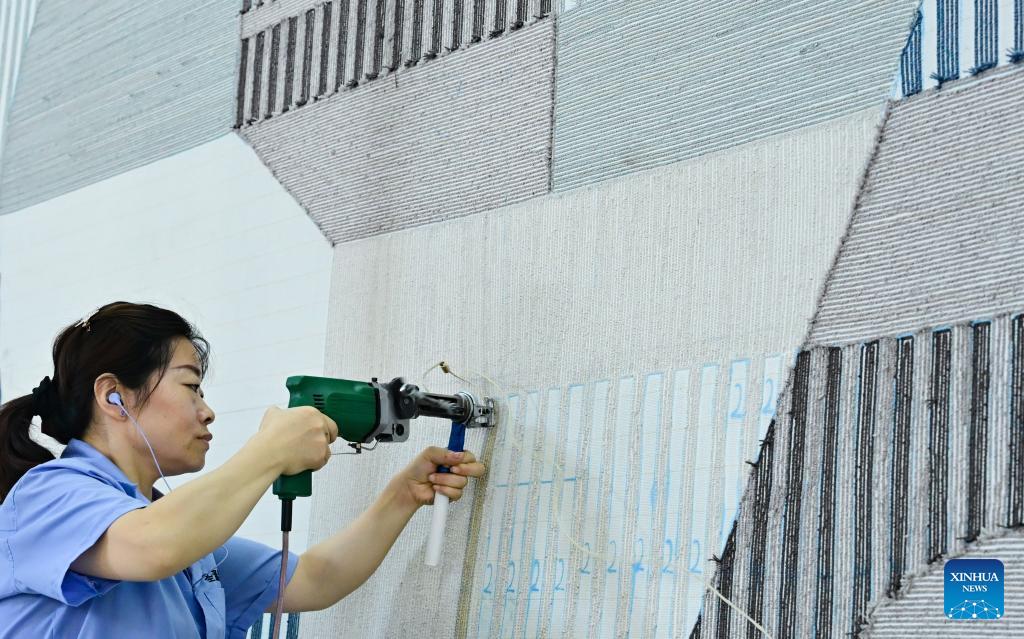
An employee works on a Tibetan carpet at a workshop of Shengyuan carpet group in Xining, northwest China's Qinghai Province, July 21, 2025. Located in Chengzhong District of Xining City, Shengyuan carpet group is an enterprise specializing in the design and production of Tibetan carpets. Since its establishment in 2007, the company has recruited people from surrounding areas, with 90% of its employees coming from nearby villages and including various ethnic minorities such as Tibetan and Tu ethnic groups.
Tibetan carpet is a traditional handicraft on the Qinghai-Tibetan Plateau with a history of more than 2,000 years. The fine yak and sheep wool and the delicate weaving skills and patterns made the handmade products popular among overseas and domestic customers. In 2006, the weaving skills of Tibetan carpets from Jiaya Village, a village of Huangzhong County in northwest China's Qinghai Province, were listed as a national intangible cultural heritage of China.
In recent years, Qinghai has guided Tibetan carpet enterprises to integrate modern technology and traditional handicrafts, which injects new momentum into rural revitalization while preserving traditional skills. (Xinhua/Qi Zhiyue)
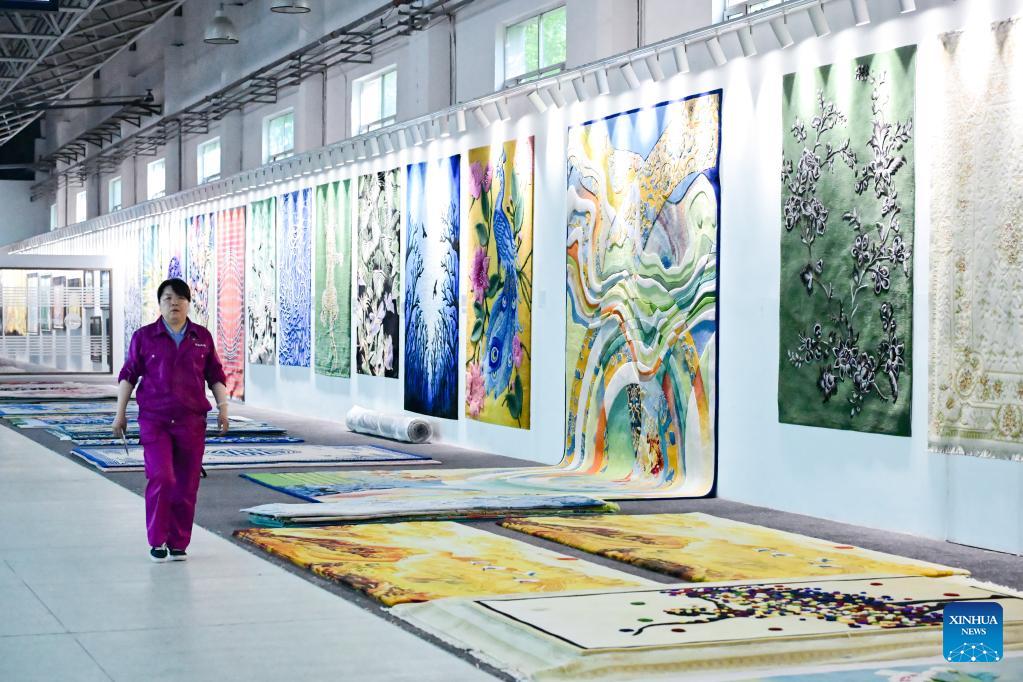
Tibetan carpets are displayed at a workshop of Shengyuan carpet group in Xining, northwest China's Qinghai Province, July 21, 2025. Located in Chengzhong District of Xining City, Shengyuan carpet group is an enterprise specializing in the design and production of Tibetan carpets. Since its establishment in 2007, the company has recruited people from surrounding areas, with 90% of its employees coming from nearby villages and including various ethnic minorities such as Tibetan and Tu ethnic groups.
Tibetan carpet is a traditional handicraft on the Qinghai-Tibetan Plateau with a history of more than 2,000 years. The fine yak and sheep wool and the delicate weaving skills and patterns made the handmade products popular among overseas and domestic customers. In 2006, the weaving skills of Tibetan carpets from Jiaya Village, a village of Huangzhong County in northwest China's Qinghai Province, were listed as a national intangible cultural heritage of China.
In recent years, Qinghai has guided Tibetan carpet enterprises to integrate modern technology and traditional handicrafts, which injects new momentum into rural revitalization while preserving traditional skills. (Xinhua/Qi Zhiyue)
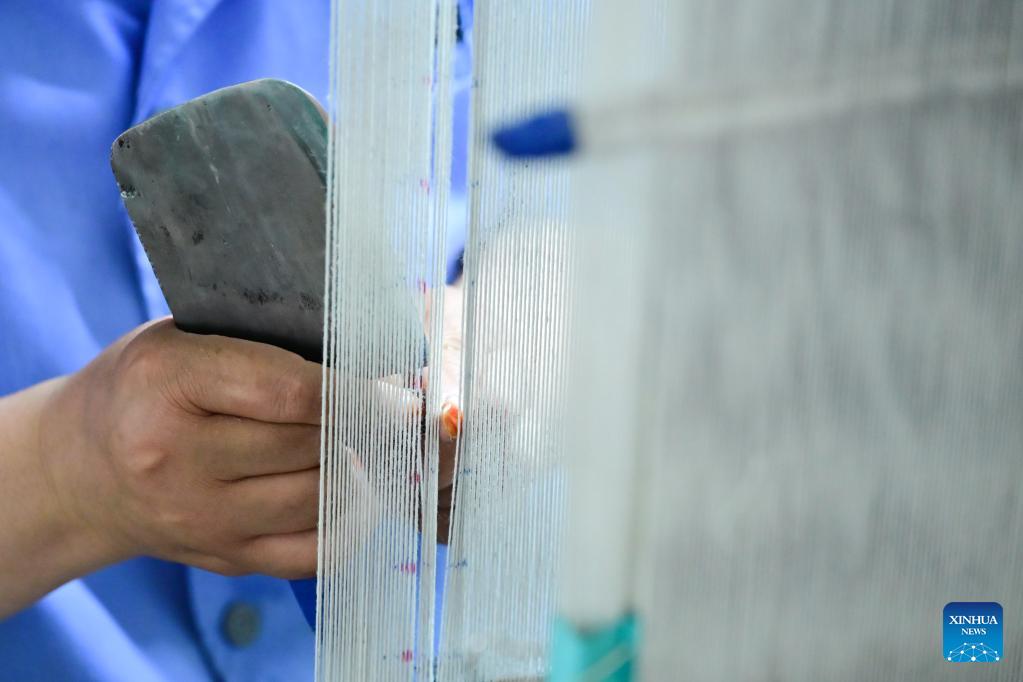
An employee sorts yarns at a workshop of Shengyuan carpet group in Xining, northwest China's Qinghai Province, July 21, 2025. Located in Chengzhong District of Xining City, Shengyuan carpet group is an enterprise specializing in the design and production of Tibetan carpets. Since its establishment in 2007, the company has recruited people from surrounding areas, with 90% of its employees coming from nearby villages and including various ethnic minorities such as Tibetan and Tu ethnic groups.
Tibetan carpet is a traditional handicraft on the Qinghai-Tibetan Plateau with a history of more than 2,000 years. The fine yak and sheep wool and the delicate weaving skills and patterns made the handmade products popular among overseas and domestic customers. In 2006, the weaving skills of Tibetan carpets from Jiaya Village, a village of Huangzhong County in northwest China's Qinghai Province, were listed as a national intangible cultural heritage of China.
In recent years, Qinghai has guided Tibetan carpet enterprises to integrate modern technology and traditional handicrafts, which injects new momentum into rural revitalization while preserving traditional skills. (Xinhua/Qi Zhiyue)
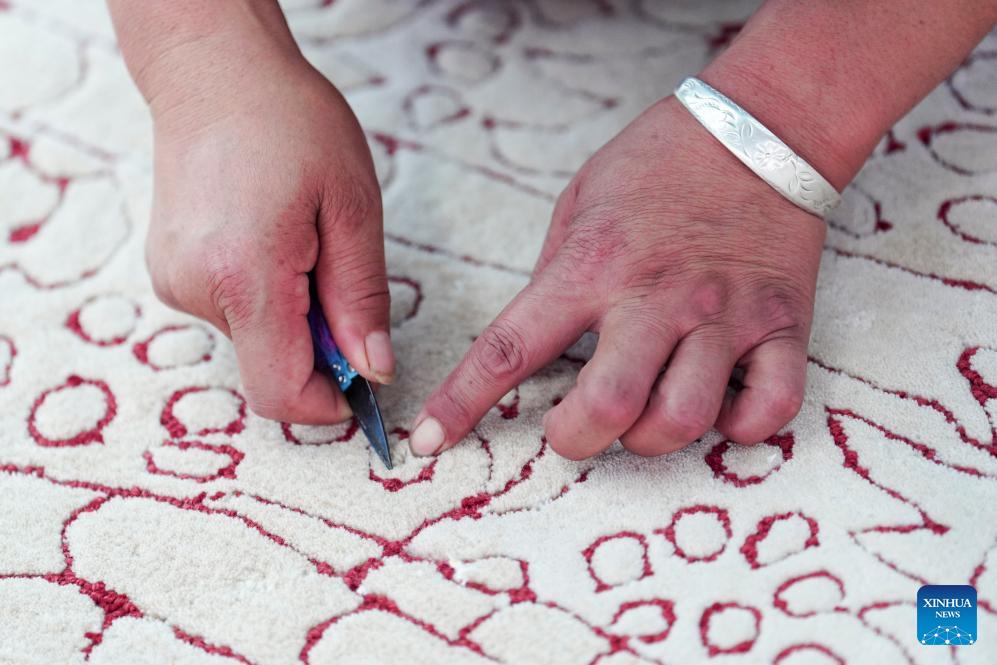
An employee works on a Tibetan carpet at a workshop of Shengyuan carpet group in Xining, northwest China's Qinghai Province, July 21, 2025. Located in Chengzhong District of Xining City, Shengyuan carpet group is an enterprise specializing in the design and production of Tibetan carpets. Since its establishment in 2007, the company has recruited people from surrounding areas, with 90% of its employees coming from nearby villages and including various ethnic minorities such as Tibetan and Tu ethnic groups.
Tibetan carpet is a traditional handicraft on the Qinghai-Tibetan Plateau with a history of more than 2,000 years. The fine yak and sheep wool and the delicate weaving skills and patterns made the handmade products popular among overseas and domestic customers. In 2006, the weaving skills of Tibetan carpets from Jiaya Village, a village of Huangzhong County in northwest China's Qinghai Province, were listed as a national intangible cultural heritage of China.
In recent years, Qinghai has guided Tibetan carpet enterprises to integrate modern technology and traditional handicrafts, which injects new momentum into rural revitalization while preserving traditional skills. (Xinhua/Qi Zhiyue)
 首頁
首頁

 陜公網安備 61010302000964號
